
When energy becomes governance
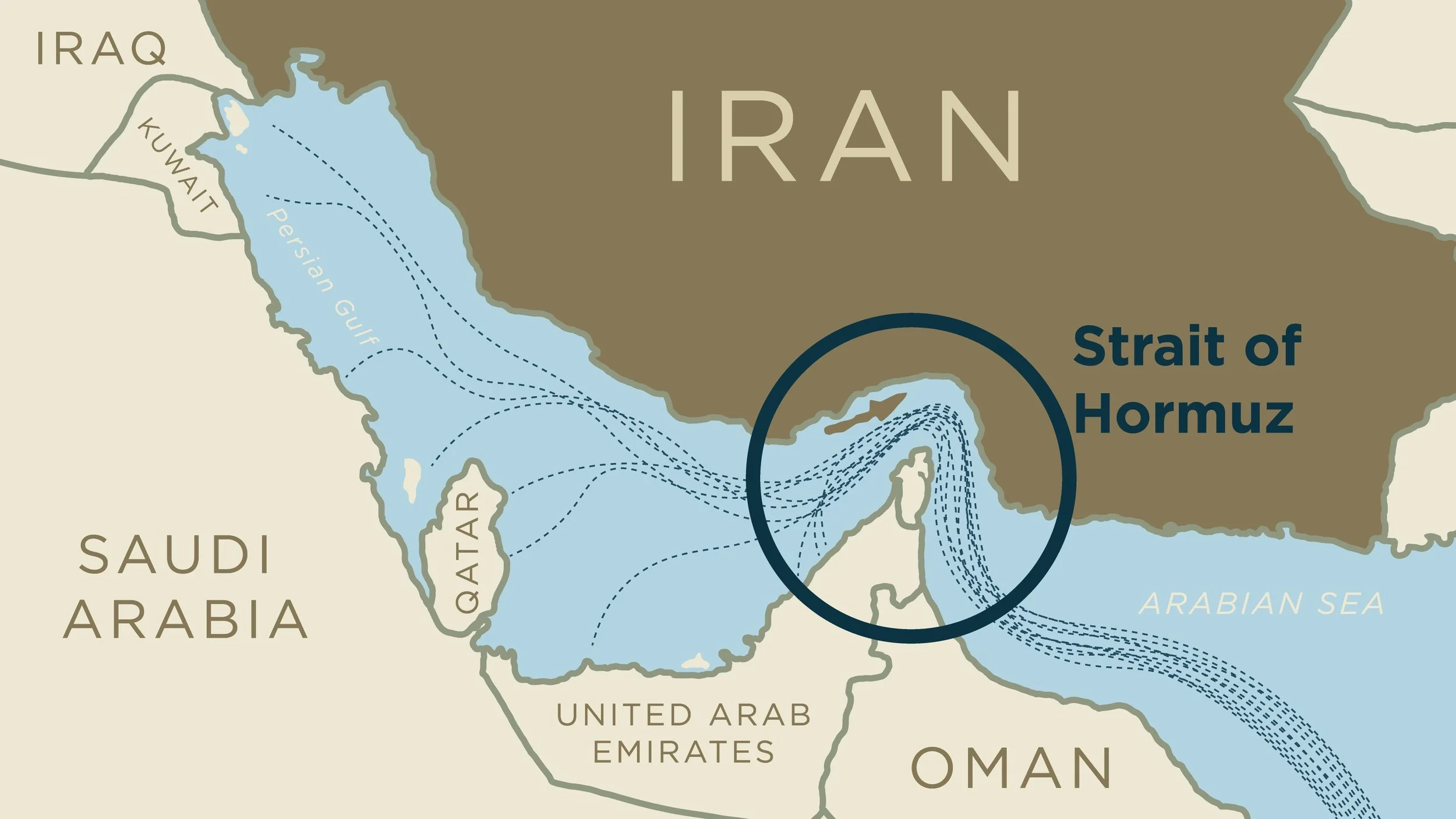
The Strait of Hormuz is one of the most critical chokepoints in the global energy system and illustrates the structural vulnerability of international energy flows.
Abstract
Geopolitical tensions in global energy markets increasingly shape corporate strategy. Disruptions in key supply routes, combined with sanctions regimes and shifting geopolitical alliances, create operating environments characterized by structural uncertainty. This research note argues that geopolitical energy shocks transform energy from a cost variable into a governance variable in corporate decision-making. As a result, firms must adapt their decision architectures to operate under persistent uncertainty rather than relying on stable assumptions about energy supply and pricing.
Key Insights
Geopolitical disruptions in global energy systems create operating environments characterized by structural uncertainty.
Energy volatility increasingly affects strategic decisions in multinational corporations, from supply chain configuration to capital allocation.
Geopolitical energy shocks transform energy from a cost variable into a governance variable in corporate strategy.
Introduction
Recent geopolitical tensions in the Middle East have once again exposed the structural vulnerability of global energy flows. Military escalation and the resulting risks to shipping routes in the Strait of Hormuz have pushed oil prices upward and renewed concerns about the stability of international energy markets. While such developments are often interpreted primarily through the lens of commodity markets or geopolitical rivalry, their implications extend well beyond the energy sector itself.
For multinational corporations operating complex global supply chains, energy disruptions represent more than temporary price volatility. They alter the conditions under which strategic decisions must be made. Production planning, logistics management, capital allocation, and risk governance suddenly depend on variables that are difficult to predict and even harder to control. The central challenge for corporate leadership is therefore not merely reacting to changing market prices but maintaining effective decision-making processes when the assumptions underlying strategic planning become unstable.
Structural dependence of modern economies
Despite decades of discussion about energy transitions and diversification, modern economies remain deeply dependent on stable flows of oil and natural gas. Although the share of oil in the global energy mix has declined since the energy crises of the 1970s, absolute demand remains historically high. Global transportation systems, industrial production networks, and logistics infrastructures continue to rely heavily on fossil fuels. Global energy outlook analyses by the International Energy Agency consistently show that oil and natural gas continue to underpin transportation systems and industrial production worldwide.¹
This structural dependence means that disruptions in energy supply rarely remain confined to the energy sector. Instead, they propagate through transport costs, manufacturing margins, supply chain operations, and financial markets. In highly interconnected economies, energy shocks quickly move beyond commodity markets and affect the broader architecture of economic activity.
The persistence of these dependencies highlights a key reality: the global energy system is undergoing transformation, but the transition away from fossil fuels will unfold over decades rather than years.
The Strait of Hormuz as a systemic bottleneck
The Strait of Hormuz illustrates how geographically concentrated vulnerabilities can shape global economic dynamics. The narrow maritime corridor between the Persian Gulf and the Gulf of Oman functions as a critical gateway for a significant share of global oil exports.
Even the perception that shipping routes through the Strait might become unstable can trigger immediate reactions. Insurance costs rise, traders incorporate geopolitical risk into commodity prices, and governments and corporations begin reassessing supply security. Energy markets respond not only to physical disruptions but also to expectations about future instability.
As Daniel Yergin has shown in his analysis of global energy geopolitics, energy flows have historically been closely intertwined with strategic power structures and international security dynamics.² Disruptions in critical supply routes therefore carry consequences that extend well beyond commodity markets.
Compounding geopolitical energy shocks
The current energy environment is shaped not by a single geopolitical event but by several overlapping disruptions. The war in Ukraine has drastically reduced Europe’s access to Russian pipeline gas, forcing a rapid shift toward alternative suppliers and liquefied natural gas imports. At the same time, tensions in the Middle East threaten critical transport routes for global oil shipments.
These developments illustrate how geopolitical conflicts can compound each other in global energy systems. Disruptions in different regions simultaneously affect supply routes, market expectations, and energy prices. For corporations operating internationally, energy supply uncertainty therefore no longer originates from a single regional crisis but from multiple interacting geopolitical dynamics.
In this environment, energy volatility becomes a structural feature of the operating environment rather than an isolated market shock.
Decision-making under structural uncertainty
For multinational corporations, such disruptions introduce a distinct strategic problem. Executives must make strategic decisions while critical variables, including energy prices, transport reliability, and geopolitical developments, remain uncertain.
Organizations must determine whether to adjust production schedules, secure alternative supply channels, increase inventories, hedge against price volatility, or postpone capital investments. Each decision involves trade-offs between operational continuity, cost control, and strategic flexibility.
Traditional strategic planning frameworks assume relatively stable external conditions in which key inputs such as energy costs and logistics capacity can be forecast with reasonable accuracy. Geopolitical shocks undermine these assumptions. Forecasting models become less reliable, and strategic planning must operate with incomplete information.
In such environments, the central difficulty facing corporate leadership is not predicting market outcomes but acting despite uncertainty. As Herbert Simon famously argued, organizational decision-makers frequently operate under conditions of bounded rationality when information is incomplete and environmental complexity is high.³
Decision architectures under stress
Most large organizations rely on structured governance mechanisms to manage complex risks. Scenario planning, risk committees, hedging strategies, and staged investment processes provide frameworks for navigating uncertainty while maintaining strategic discipline.
However, geopolitical shocks can place these decision architectures under considerable stress. When uncertainty originates from political developments that cannot easily be quantified, even sophisticated risk models lose predictive power. Decision-making then relies more heavily on managerial judgment, organizational experience, and coordination across internal units.
In such environments, the resilience of corporate strategy depends less on the accuracy of forecasts and more on the adaptability of governance structures. Organizations capable of rapidly integrating new information and adjusting strategic assumptions are better positioned to navigate geopolitical disruptions than those relying on rigid planning frameworks.
Geopolitical energy shocks therefore reveal an important organizational reality: the effectiveness of corporate strategy depends not only on external market conditions but also on the internal structures through which decisions are made.
Strategic implications
Energy disruptions highlight a broader structural shift in corporate strategy. Energy is no longer merely an operational input or cost factor. Instead, it increasingly shapes how organizations evaluate geopolitical risk, allocate capital, and structure supply chains.
Geopolitical energy shocks transform energy from a cost variable into a governance variable in corporate strategy.
Corporate decision-making must therefore integrate geopolitical analysis into strategic planning. Firms must assess not only market dynamics but also the political stability of supply routes, the potential for sanctions or trade disruptions, and the broader geopolitical environment in which their operations take place.
This shift encourages organizations to adopt decision frameworks that emphasize flexibility and resilience. Rather than relying solely on deterministic forecasts, strategic planning increasingly incorporates scenario-based approaches and adaptive operational models capable of functioning under persistent uncertainty.
Concluding observation
The re-emergence of energy as a geopolitical instrument demonstrates how deeply global economic systems remain intertwined with political developments. Disruptions in energy supply routes and geopolitical conflicts simultaneously affect markets, supply chains, and corporate strategy.
For corporations operating in complex global environments, the challenge is not merely managing fluctuating energy prices. The challenge is maintaining effective decision-making processes when the assumptions underlying strategic planning become unstable.
In complex systems, resilience depends less on predicting geopolitical shocks than on designing organizations capable of making decisions when such shocks inevitably occur.
References
International Energy Agency. World Energy Outlook 2023. Paris: International Energy Agency, 2023.
Yergin, Daniel. The New Map: Energy, Climate, and the Clash of Nations. New York: Penguin Press, 2020.
Simon, Herbert A. The Sciences of the Artificial. 3rd ed. Cambridge, MA: MIT Press, 1996.